How Gold Buyers Test Gold: A Complete Guide to Professional Gold Testing
Last updated: 9 July 2026
Written by: Lionel Refson, Precious Metals Buyer, Birmingham Gold Company
Quick Answer
Professional gold buyers test gold using a combination of hallmarks, visual inspection, weighing, XRF analysis, acid testing, magnet checks and experience. No single test is perfect on its own. A reliable valuation usually comes from using several checks together to confirm whether an item is genuine, what purity it is, and how much precious metal it contains.
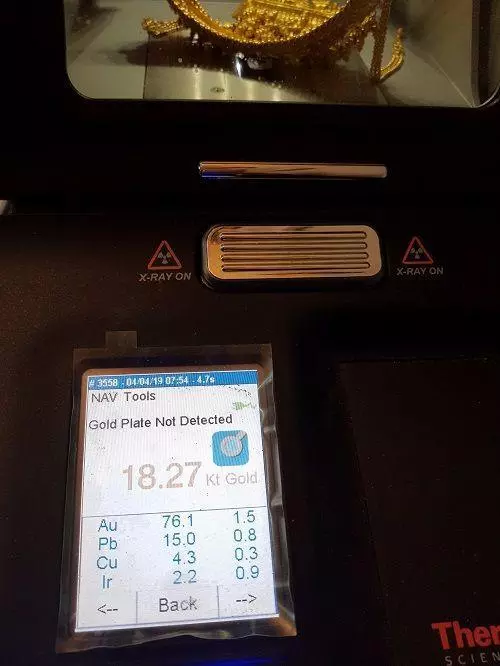
Before a professional gold buyer can tell you what your jewellery is worth, they first need to know exactly what it is made from. Gold that looks identical on the outside can have very different precious metal content, which is why professional testing is such an important part of the valuation process.. Two items may look very similar but contain very different amounts of gold. A heavy chain may be solid 9ct gold, gold-filled, plated, repaired with lower-grade metal, or fitted with non-gold parts. A ring may be hallmarked 18ct but include later repairs, stones, solder or mixed metal sections.
This is why professional testing matters. Gold buyers are not simply guessing from colour or weight. A proper assessment considers purity, weight, hallmarks, condition, construction, metal composition and the current market price of gold.
This guide explains the main ways gold buyers test gold, what each method can and cannot prove, and why experience still matters even when modern testing equipment is used.
Contents
Why Gold Needs Testing
Many people assume gold is easy to identify. In reality, precious metal testing can be more complicated than it appears. Jewellery can be worn, repaired, plated, filled, altered, mixed or incorrectly stamped. Some items are genuine gold throughout, while others contain only a thin layer of gold over another metal.
Testing protects both the customer and the buyer. The customer wants a fair price for the precious metal content. The buyer needs to avoid overpaying for plated, filled, counterfeit or incorrectly described items. A proper test helps establish the real metal value before an offer is made.
Key Takeaways
- Gold testing is used to confirm purity, authenticity and payable precious metal content.
- Hallmarks are helpful, but they are not always enough on their own.
- XRF testing is fast and non-destructive, but professional judgement is still important.
- Acid testing remains useful when used correctly by an experienced buyer.
- The best assessments usually combine several methods rather than relying on one test.
Hallmarks and What They Tell You
A hallmark is often the first thing a gold buyer checks. In the UK, hallmarks are official marks applied to many precious metal items to indicate metal type and fineness. For gold, common marks include 375 for 9ct, 585 for 14ct, 750 for 18ct, 916 for 22ct and 999 for fine gold.
A hallmark can be extremely useful because it gives an immediate indication of purity. However, it should not always be treated as final proof. Items can be repaired, resized, altered or made from more than one metal. Some older or foreign items may have unfamiliar marks. Some lightweight items may be exempt from hallmarking. Counterfeit or misleading marks can also exist.
For that reason, a professional buyer will often use hallmarks as a starting point rather than the only test.
| Gold mark | Common description | Gold content |
|---|---|---|
| 375 | 9ct gold | 37.5% gold |
| 585 | 14ct gold | 58.5% gold |
| 750 | 18ct gold | 75% gold |
| 916 | 22ct gold | 91.6% gold |
| 999 | Fine gold | 99.9% gold |
You can read more in our guide to UK gold hallmarks.
Did You Know?
A genuine hallmark is a strong indicator of precious metal content, but professional buyers often carry out additional checks because repairs, alterations, mixed metals and counterfeit marks can occasionally affect the final assessment.
Visual Inspection: What an Experienced Buyer Looks For
Before using specialist equipment, an experienced gold buyer will usually examine the item carefully. Visual inspection does not replace proper testing, but it can reveal important clues.
A buyer may look at the colour of the metal, the wear pattern, the joins, the clasp, the solder points, the inside of rings, the backs of earrings and the construction of chains. They may also check whether the item looks cast, plated, filled, hollow, repaired or assembled from different parts.
Visual inspection is especially useful with jewellery because the value is not always based on total weight alone. A chain may have a non-gold clasp spring. A ring may contain stones. A brooch may include a steel pin. A watch may have a gold case but a non-gold movement. These details can affect the payable precious metal weight.
Experienced buyers often recognise clues within seconds that would be difficult for someone without specialist experience to spot. The colour of worn edges, the way links have been soldered, clasp construction, repair marks and manufacturing techniques can all suggest whether further testing is required.
Common visual clues
- Colour differences between different parts of the item.
- Wear showing another metal underneath.
- Suspicious stamps or marks.
- Heavy plating over base metal.
- Steel springs, pins or screws.
- Later repairs using different metal.
- Hollow or weighted construction.
This is where experience matters. A machine can analyse metal composition, but an experienced buyer knows where to look and which parts of an item may need closer checking.
XRF Testing
XRF stands for X-ray fluorescence. It is a modern, non-destructive method used to analyse the metal composition of many precious metal items. An XRF analyser can help identify gold, silver, platinum, palladium, copper, nickel, zinc and other elements present near the surface of an item.
For customers, one of the main advantages of XRF testing is that it does not normally require cutting or damaging the jewellery. The item can be tested quickly, and the result can help confirm whether the metal is consistent with the expected purity.
XRF testing is particularly useful for mixed precious metal buying because it can help distinguish between gold, silver, platinum and palladium items. It can also help identify unusual alloys, foreign gold and items where a hallmark is unclear or absent.
What XRF testing is good for
- Checking the metal composition of jewellery and precious metal items.
- Confirming whether a hallmark appears consistent with the metal tested.
- Testing items without cutting into them.
- Identifying precious metals such as gold, silver, platinum and palladium.
- Helping assess unusual, foreign or unmarked items.
Limitations of XRF testing
XRF testing is very useful, but it should still be interpreted properly. It analyses the area being tested, so the buyer must choose the right test points. If an item is heavily plated, repaired, filled or made from different parts, testing only one surface may not tell the full story.
This is why professional testing is not just about owning a machine. It is about knowing how to use the result in context.
An XRF analyser does not simply say "this is gold". It estimates the elemental composition of the tested area, helping the buyer assess the proportions of gold and other metals present.
Acid Testing
Acid testing is a traditional method used by gold buyers to help assess gold purity. It usually involves making a small test mark on a testing stone and applying acid formulated for a particular carat of gold. The way the mark reacts can help indicate whether the item is consistent with that purity.
Acid testing is especially useful when hallmarks are missing, unclear or questionable. It can also be used alongside visual inspection and XRF testing to build confidence in an assessment.
However, acid testing should be carried out carefully. Used badly, it can be misleading. Used by an experienced buyer, it remains a valuable tool.
Advantages of acid testing
- Simple and long-established method.
- Useful for confirming expected gold purity.
- Can help identify plated or lower-grade items.
- Works well alongside other tests.
Limitations of acid testing
- Requires experience to interpret correctly.
- Usually tests a sample area rather than the entire item.
- May leave a small test mark if applied directly to an item.
- Can be less useful on complex mixed-metal items.
Magnet Testing
A magnet test is a quick screening method. Pure gold is not magnetic, so if an item is strongly attracted to a magnet, it may contain iron, steel or another magnetic metal. This can be a useful early warning sign.
However, magnet testing is only a basic check. An item that does not stick to a magnet is not automatically gold. Many non-gold metals are also non-magnetic. Likewise, a gold item may contain a steel spring, pin or internal component that reacts to a magnet even though part of the item is genuine gold.
For that reason, a magnet test should never be treated as a complete gold test. It is useful as part of a wider assessment, not as proof on its own.
Density Testing
Density testing, sometimes called specific gravity testing, can help identify some precious metals by comparing weight and volume. Gold is very dense compared with many common base metals, so density can sometimes provide useful supporting evidence.
In practice, density testing is not suitable for every item. Jewellery with stones, hollow sections, mixed metals, solder, springs or complex shapes can give misleading results. It is more useful for certain solid items, bars, coins or pieces where volume can be measured accurately.
Professional buyers may use density as a supporting method, but it is rarely the only test used for ordinary jewellery.
Gold Testing Method Comparison Table
Each testing method has strengths and limitations. The most reliable assessment usually comes from combining methods rather than relying on one single test.
| Testing method | What it checks | Advantages | Limitations |
|---|---|---|---|
| Hallmark check | Official purity marks and assay information | Fast, useful starting point, no damage | Does not always prove the whole item is genuine or unchanged |
| Visual inspection | Wear, repairs, plating, construction and non-gold parts | Excellent for spotting clues before technical testing | Depends heavily on experience |
| XRF testing | Metal composition at the tested area | Fast, non-destructive, useful for gold, silver, platinum and palladium | Surface analysis; results must be interpreted correctly |
| Acid testing | Reaction of a test mark against acids for different carats | Traditional, useful, effective in experienced hands | May test only a small area; can be misleading if used badly |
| Magnet testing | Presence of magnetic metals | Very quick basic screening check | Not sticking to a magnet does not prove an item is gold |
| Density testing | Weight compared with volume | Useful for some solid items, coins and bars | Less reliable for jewellery with stones, hollow areas or mixed metals |
Why Professional Experience Still Matters
Modern equipment is extremely useful, but professional gold testing is not just about machines. Experience still matters because jewellery is often complicated. A buyer may need to decide where to test, whether an item has been repaired, whether parts should be deducted, whether a hallmark makes sense, and whether an item may have value beyond scrap metal.
For example, a gold watch may contain a gold case, non-gold movement, glass, dial, strap, steel screws and springs. A ring may have stones, solder, resizing marks and different metal sections. A brooch may have a gold front but a steel pin. These details affect the final valuation.
This is why the best gold assessments combine equipment, testing methods and human judgement.
Expert Tip
A single test can be useful, but several tests used together give a much better picture. Hallmarks, visual inspection, XRF analysis, acid testing and experience all help build confidence before a final offer is made.
Worked Example: Why Testing Can Change the Value of an Item
Imagine a customer brings in a yellow metal ring marked 18ct. At first glance, it looks like a straightforward 18ct gold ring. However, a professional buyer will normally check more than the stamp alone.
| Stage | What the buyer checks | Why it matters |
|---|---|---|
| Hallmark | The ring is marked 18ct or 750 | This suggests 75% gold, but it still needs checking |
| Visual inspection | The shank appears resized | The repair may have been done with lower-grade solder or different metal |
| XRF test | The main ring tests as 18ct, but the repair area tests lower | The buyer must consider the item as a whole, not just the best area |
| Stone check | The ring contains a stone | The stone adds weight but is not gold |
| Final valuation | The payable gold weight is adjusted fairly | The customer receives an offer based on actual precious metal content |
This is why testing matters. Without proper checking, one buyer might value the whole ring as perfect 18ct gold, while another might reduce the offer too far because of uncertainty. A careful assessment explains what has been found and how the offer is calculated.
Common Myths About Gold Testing
| Myth | Reality |
|---|---|
| A hallmark always proves an item is genuine | A hallmark is useful, but repairs, mixed metals, exemptions and counterfeit marks mean further checks may still be needed. |
| XRF testing damages jewellery | XRF testing is normally non-destructive and does not require cutting into the item. |
| If it does not stick to a magnet, it must be gold | Many non-gold metals are also non-magnetic, so magnet testing is only a basic screening method. |
| Acid testing is old-fashioned and useless | Acid testing remains useful when used correctly by an experienced buyer alongside other methods. |
| Broken jewellery is harder to test | Broken jewellery can often be tested and valued normally if the precious metal content is clear. |
How Birmingham Gold Company Tests Precious Metals
At Birmingham Gold Company, precious metal testing is part of the normal valuation process. We assess gold, silver, platinum, palladium, coins, watches, jewellery and scrap precious metals using a combination of experience, weighing, visual inspection and appropriate testing methods.
Where necessary, we may check hallmarks, test metal composition, consider stones or non-gold parts, and explain how an offer has been calculated. Our aim is to make the process clear, fair and understandable before you decide whether to sell.
If you want to understand why gold buyers can offer different prices for the same item, read our guide: Why Do Gold Buyers Pay Different Prices?
Find Out What Your Gold Could Be Worth Today
Use our live calculator to estimate the value of your gold, silver and other precious metals before you sell.
Useful Related Guides
- Why Gold Buyers Pay Different Prices
- Gold and Silver Calculator
- Live Gold Prices
- Gold Price Per Gram UK
- Gold Hallmarks Guide
- Sell Rolled Gold
- Sell Asian Gold
- Sell Gold by Post
FAQs About How Gold Buyers Test Gold
How do gold buyers test gold?
Gold buyers usually use several checks together, including hallmarks, visual inspection, weighing, XRF testing, acid testing, magnet checks and experience.
Is a hallmark enough to prove gold is genuine?
A hallmark is helpful, but it is not always enough on its own. Items can be repaired, altered, mixed with other metals or carry misleading marks, so further testing may be needed.
What does XRF testing mean?
XRF stands for X-ray fluorescence. It is a non-destructive method that helps analyse the metal composition of the area being tested.
Does XRF testing damage jewellery?
No. XRF testing is normally non-destructive and does not require cutting into the item.
Can XRF testing be wrong?
XRF testing is very useful, but the result must be interpreted correctly. It analyses the area tested, so plated, repaired or mixed-metal items may need additional checks.
Do gold buyers still use acid testing?
Yes. Acid testing is still useful when used correctly, especially alongside hallmarks, visual inspection and XRF testing.
Does acid testing damage gold?
Acid testing is often carried out on a test mark made on a stone. If acid is applied directly to an item, it may leave a small mark, so it should be done carefully.
Can I test gold with a magnet?
A magnet can help identify some non-gold or steel parts, but it cannot prove an item is gold. Many non-gold metals are also non-magnetic.
If jewellery sticks to a magnet, is it fake?
Not always. It may contain a steel spring, pin, screw or other magnetic part while still having some genuine gold content.
Can gold-plated jewellery pass a basic test?
Some plated items can appear convincing at first glance, which is why professional buyers may use several testing methods rather than relying on appearance alone.
What is rolled gold?
Rolled gold is a layer of gold bonded to another metal. It is not the same as solid gold and is valued differently.
Can gold-filled jewellery be sold as scrap gold?
Gold-filled jewellery contains some gold, but usually far less than solid gold jewellery. Its value depends on the actual recoverable gold content.
Do buyers test every item?
A professional buyer will normally check items carefully, especially where purity, construction, hallmarking or value is uncertain.
How are stones handled during testing?
Stones add weight but are not gold. When valuing jewellery for metal content, the buyer may need to account for stones and other non-gold parts.
Can a ring test as different carats in different places?
Yes. Repairs, resizing, solder or mixed construction can mean one part of an item tests differently from another.
Why does experience matter if machines are available?
Experience helps the buyer decide where to test, how to interpret results, whether parts should be deducted and whether an item may be more than ordinary scrap.
Can white gold be tested?
Yes. White gold can be tested, but it may contain different alloying metals, so proper interpretation is important.
Can rose gold be tested?
Yes. Rose gold can be tested like other gold alloys. Its colour usually comes from copper content, but the gold purity still needs to be assessed.
What if my gold has no hallmark?
Unhallmarked gold can still be tested. A missing hallmark does not automatically mean an item is worthless, but it does mean testing becomes more important.
Can foreign gold be tested?
Yes. Foreign gold can be assessed using testing methods such as XRF, acid testing, visual inspection and weight checks.
Can old jewellery be tested?
Yes. Older jewellery can usually be tested, although wear, repairs, unusual marks or mixed construction may need extra care.
Can broken gold be tested?
Yes. Broken gold can usually be tested and valued in the same way as wearable gold if the metal content is clear.
Is testing done before an offer is made?
Yes. Proper testing and weighing should normally be completed before a final offer is made.
Can testing show platinum and palladium?
XRF testing can help identify precious metals such as platinum and palladium as well as gold and silver.
Why might two buyers test the same item differently?
Buyers may use different equipment, test different areas, interpret repairs differently or apply different risk margins. This can affect the final offer.
References and Useful Sources
For further background, customers may wish to review information from the Assay Office Birmingham, the Hallmarking Act 1973, the Royal Mint, the LBMA and the World Gold Council. These sources help explain hallmarking, precious metal standards, gold markets and professional precious metal assessment.